London, February 2026 — Across six households observed over three weeks, a consistent pattern emerged in the evening hours: the period between 9pm and midnight accounted for between 22 and 38 percent of total daily caloric intake — not from planned meals, but from unplanned eating events that respondents rarely described as eating at all.
The Definition Problem
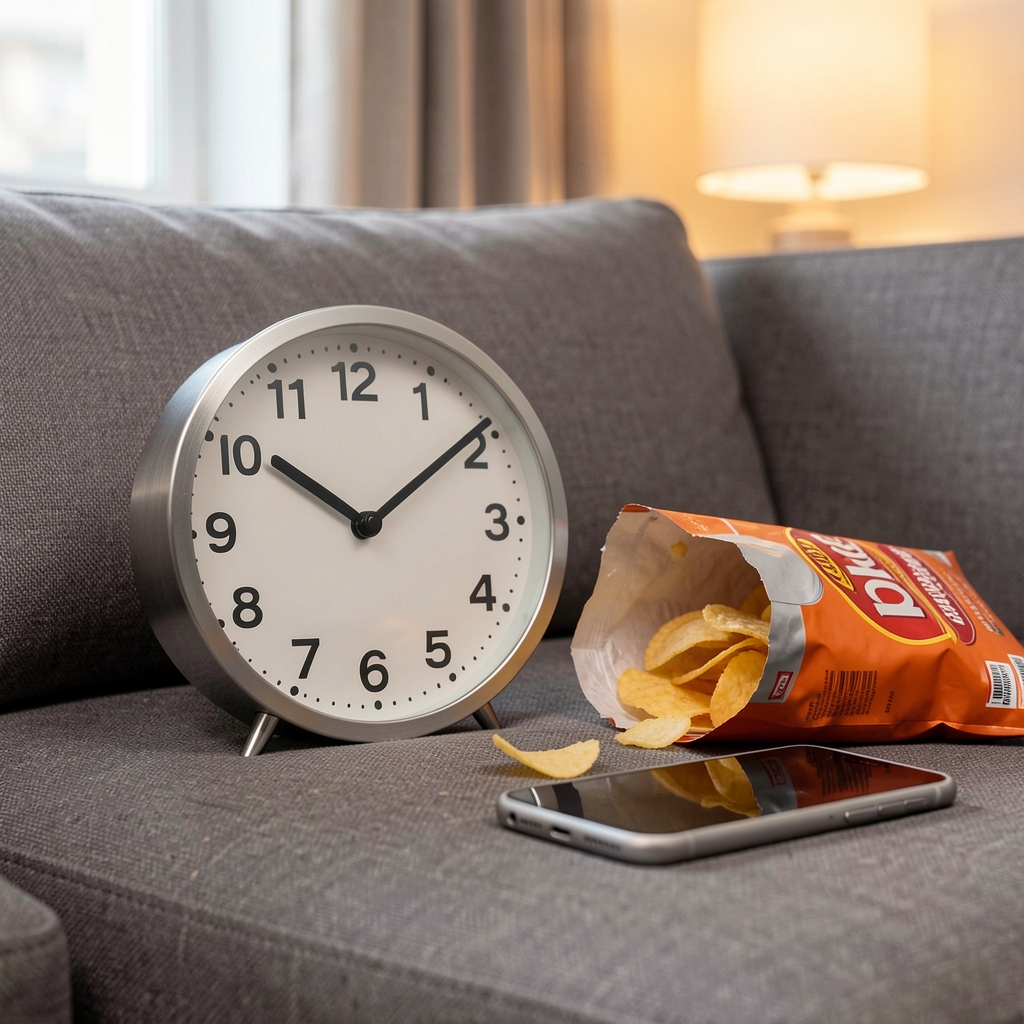
Ask someone when they last ate, and the answer will almost certainly exclude the handful of crisps taken from a shared bag while watching a programme, the second glass of juice poured without thought, the two biscuits placed on a saucer alongside a cup of tea made at 10:15pm. These events are not meals. They are not even snacks, in the respondents' own framing. They are ambient consumption: the background eating that occurs when attention is elsewhere, when the body is not hungry in any pressing sense, and when the food is simply present and reachable.
This distinction matters for understanding late-night eating habits because the documented effects of eating in the late evening are not uniformly attributable to one type of food or one mechanism. They reflect the interaction between irregular meal timing — specifically, the irregular timing of the final eating event of the day — and the type of food that is most readily available in domestic environments in the evening hours. The two factors reinforce each other in ways that prove difficult to address independently.
The households observed for this record were not selected for their eating patterns. They were recruited through a Clerkenwell-area notice in February 2026 as part of a broader habit documentation exercise. What they shared was urban working life, households of two to four people, and the specific circumstance of keeping a written food log for three consecutive weeks.
What the Evening Window Contains
Across the six households, the evening eating window — defined for recording purposes as any food consumption occurring after the last recognised sit-down meal of the day — began, on average, at 9:23pm. The first post-meal eating event was most frequently a drink with caloric content: flavoured sparkling water, a glass of wine, a hot chocolate. These were almost never noted in respondents' self-reported eating summaries when asked to recall their day's consumption informally. They appeared consistently, however, in the written log.
Liquid calories represent one of the more consistently under-reported sources of caloric intake in everyday eating documentation. The relevant number from the observed households: across all six, liquid calories consumed in the post-9pm window averaged 187 calories per adult per evening. This figure includes alcoholic drinks, non-alcoholic flavoured beverages, and milk-containing hot drinks. It does not include water or plain herbal teas. The figure is the average; the range ran from 74 to 340 calories, depending on household.
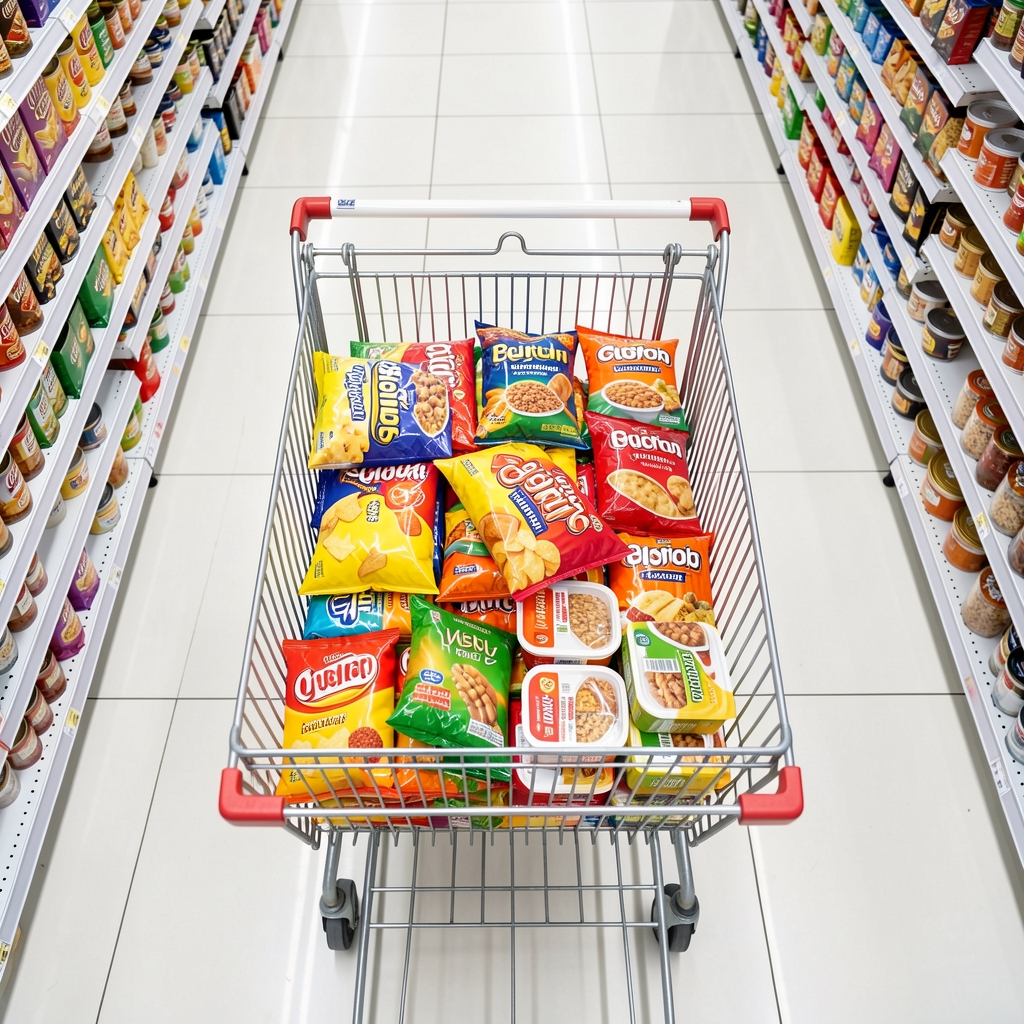
The solid eating events of the evening window followed a recognisable pattern. In four of six households, the most common late-evening food item was a packaged snack product — crisps, chocolate biscuits, crackers with cheese, flavoured nuts — consumed directly from the packet without portioning. In one household, the equivalent pattern was toast, made at irregular times between 9:30pm and 11pm, with varying toppings. In one household, the pattern was reheated leftovers consumed standing at the counter, which respondents did not classify as a meal in any sense that influenced their eating behaviour for the following day.
Skipping Earlier Meals and the Evening Compensation Pattern
The households that showed the highest late-evening caloric intake were not those that had eaten the largest evening meals. They were those that had skipped or substantially reduced an earlier meal — typically lunch. This compensation pattern is documented in nutritional awareness research under various headings, but its domestic form is less often described in qualitative detail.
In practical terms: the household member who had skipped lunch due to a work schedule, or had eaten a desk lunch of inadequate volume, arrived home with a appetite that the evening meal partially addressed but did not fully resolve. The residual hunger — not acute, but present — persisted into the evening hours and was met, over time, by incremental eating from whatever was available in the kitchen. The pattern was not experienced as bingeing or compensation. It was experienced as the ordinary evening, in which food happened to be present and consumed without particular intention.
Meal skipping consequences, in this observational framework, are therefore less acute than often described. They do not reliably produce dramatic overeating events. They produce diffuse, ambient overconsumption distributed across the evening hours in ways that are difficult to track and impossible to remember accurately the following morning.
"Nothing was eaten. Nothing is ever eaten, apparently — until the log shows otherwise. The 11pm record never lies."
Screen Presence and Eating Speed
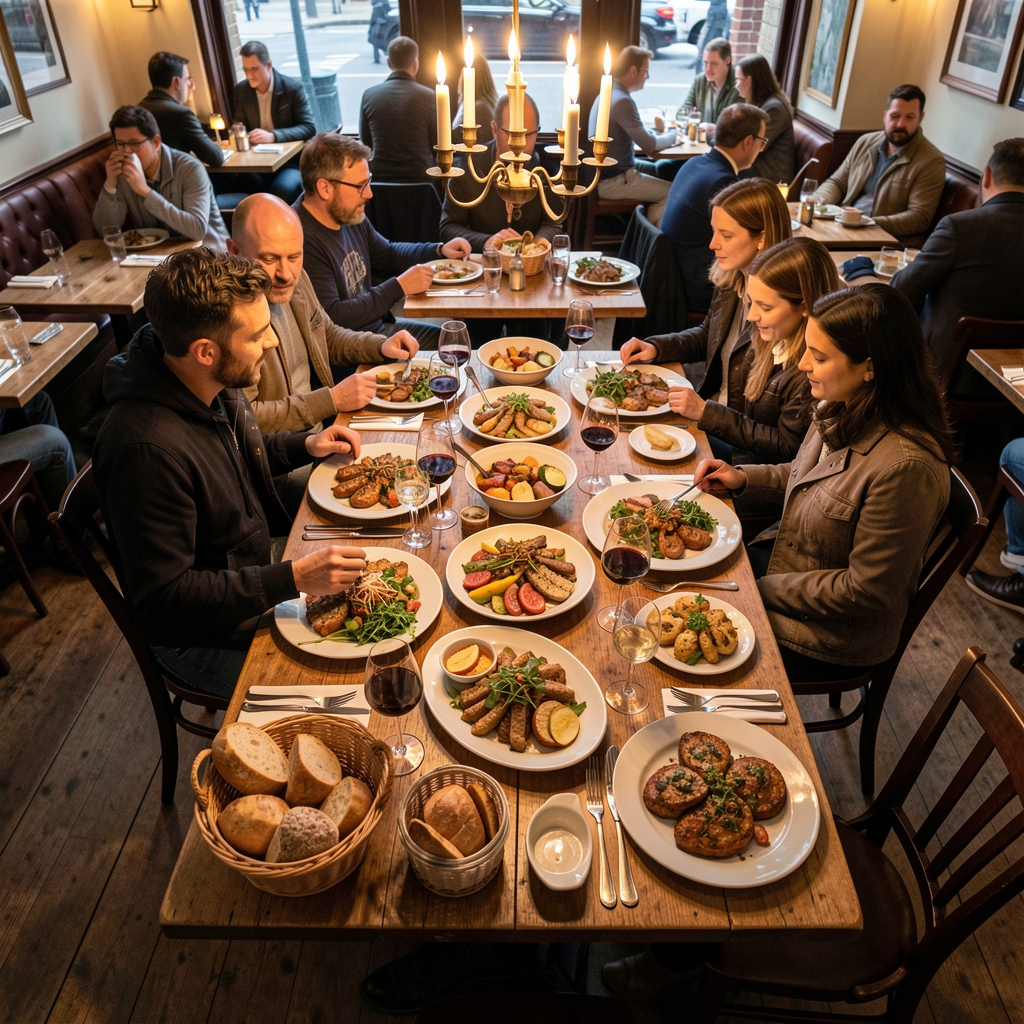
All six households had a television or screen in the primary living space. All six reported eating some portion of their evening in front of that screen. The relationship between screen-present eating and eating speed is well-established in nutritional behaviour research: eating while attending to a screen extends the eating event, reduces attention to fullness cues, and is associated with higher total intake per eating occasion.
The practical manifestation in the observed households was consistent with this picture. Evening eating occasions conducted in front of a screen lasted, on average, 22 minutes longer than those conducted without screen engagement. The additional duration was associated with continued consumption at a reduced pace rather than a discrete second helping. This is the eating speed and fullness mechanism in its most ordinary domestic form: not rapid eating, but distracted eating — eating that continues past the point of physiological satiety because the signal of satiety is competing for attention with an unrelated stimulus.
One household kept a practice, maintained across all three weeks of the observation period, of eating the final meal of the evening without the television active. Their post-dinner eating events were the lowest in frequency and volume of any household in the record. They were not, by their own account, attempting to reduce their eating. They had simply developed a different sequence of the evening's activities.
The Hidden Sugar Contribution of Late-Night Drinks
Evening drink consumption introduced hidden sugars into the picture alongside the liquid calories already noted. The flavoured sparkling waters consumed by three of the six households contained between 4g and 8g of sugar per serving — marketed in formats that the respondents associated with hydration rather than sweetened drink consumption. The hot chocolate drinks consumed in two households contained between 14g and 21g of sugar per standard preparation.
The hidden sugars in everyday food — and in drinks that are not categorised as food in domestic mental accounting — represent a category that nutritional awareness efforts have addressed in formal settings but that remains largely invisible in the self-monitoring that individuals apply to their own eating. It is not that the respondents were unaware that sugar was present in flavoured drinks in general. It is that the specific products in their cupboards did not register as sugar sources at the moment of consumption.
The evening window, in this sense, is not simply a timing issue. It is a context issue: the circumstances of the evening — reduced decision vigilance, ambient consumption habits, screen engagement, residual hunger from earlier in the day — combine to produce an eating environment that operates differently from the supervised, deliberate eating context that most nutritional guidance assumes.
Three Weeks Observed: What Changed and What Did Not
Across the three-week observation period, the households that showed the most measurable change in late-night eating patterns were those that received their week-one log summary earliest — giving them time to reflect before week two began. Two households receiving their summary on a Friday evening had made deliberate adjustments by the following Monday. Three households receiving it on a Sunday showed less consistent carry-through into the following week.
What changed, where change occurred, was primarily the liquid calorie component. Respondents who noticed the gap between what they had estimated drinking in the evening and what the log recorded moved most readily toward lower-calorie drink alternatives, or toward simply drinking less after 9pm. The solid snack component proved more resistant to modification: it was more embedded in habitual sequences (the biscuit with the tea, the crisps after returning from an evening event) and less visible in summary form.
The households in which nothing changed after week one presented a different profile. In two of these cases, the respondents reported finding the log more interesting as a record than as a prompt for adjustment. They were engaged with the data but did not experience it as directed at them. This is a consistently documented feature of nutritional awareness interventions: information does not automatically generate intention to change, and intention does not automatically generate sustained behavioural modification.
- – Post-9pm eating accounted for 22–38% of total daily caloric intake across the six observed households — with most of this consumption classified by respondents as non-eating.
- – Liquid calories in the evening window averaged 187 calories per adult per evening across the observed group — largely unrecognised in self-reporting.
- – Households that had skipped or reduced lunch showed consistently higher late-evening eating volumes — not through acute hunger events, but through diffuse ambient consumption.
- – Screen-present eating occasions lasted an average of 22 minutes longer than non-screen occasions, with continued consumption past apparent satiety as the primary mechanism.